








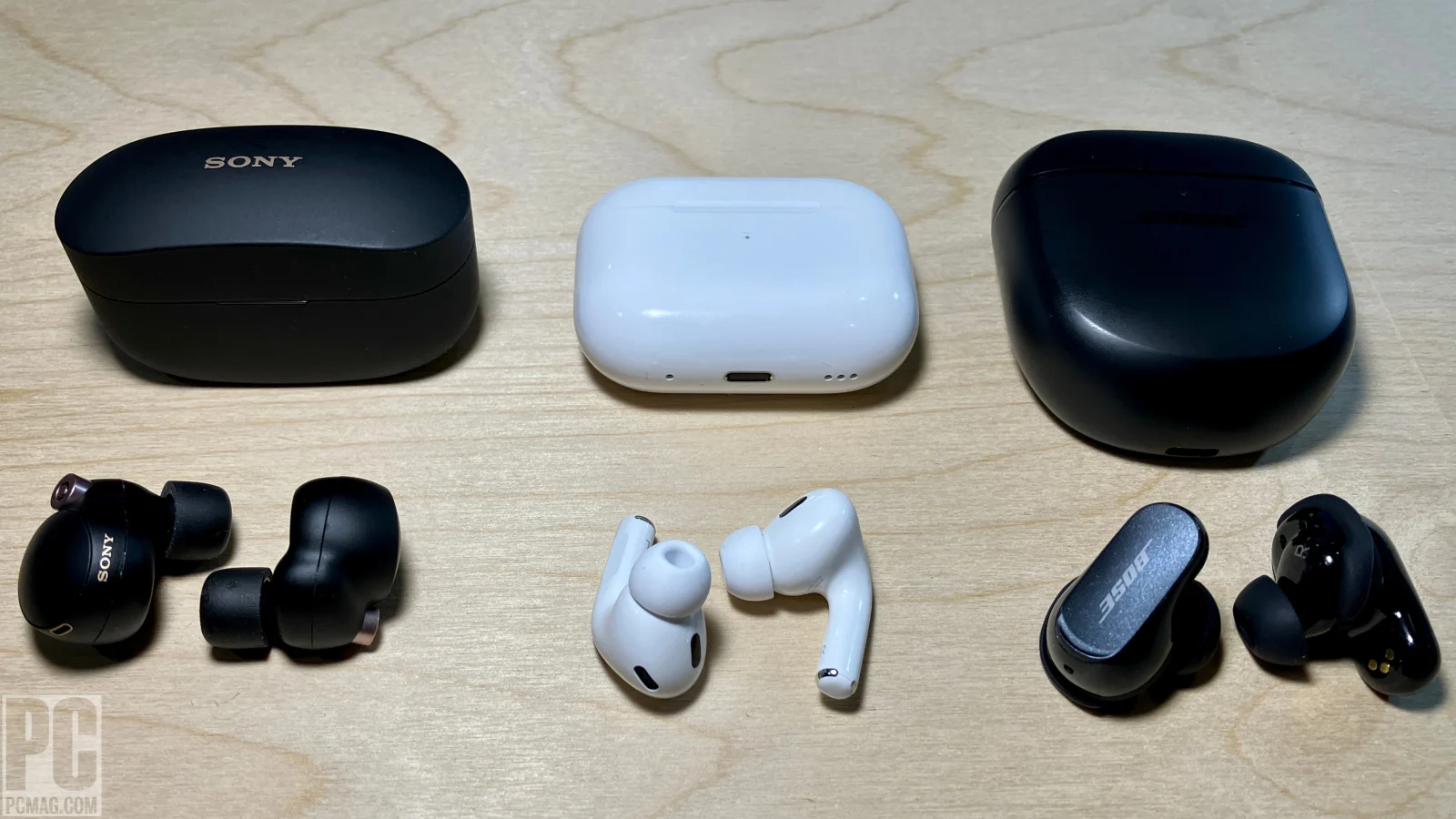
Buying earbuds has stopped being a clean brand choice. The sharper question is whether wireless earbuds should serve your phone, your music taste, your calls, or your wallet first. Nothing Ear (3) sits in an awkward but interesting lane: cheaper than Apple’s premium option, flashier than Sony, and more open to Android users than AirPods. It offers 45 dB noise cancellation, 24-bit LDAC audio, and a charging-case “Super Mic” that tries to solve call quality in a new way. AirPods Pro 3 fight back with Apple-first fit, strong active noise cancellation, and an eight-hour ANC listening claim. Sony WF-1000XM5 still speaks to listeners who care about app control, tuning, and long battery habits. For readers tracking consumer technology coverage, the real answer is not “which brand is best?” It is which pain you want your earbuds to remove first.
The Real Fight Starts Before You Press Play
Most buyers think the comparison starts with sound. It does not. It starts with the phone in your hand, the kind of noise around you, and whether you take more calls than you admit. Earbuds fail in ordinary moments: a windy parking lot, a packed subway car, a quiet office where your own chewing sounds too loud.
That is why Nothing, Apple, and Sony feel different even when their spec sheets overlap. They are solving different versions of daily irritation.
Why Your Phone Decides More Than Your Ears
AirPods Pro 3 make the most sense when your life already runs through an iPhone, Mac, Apple Watch, or iPad. Pairing, switching, Find My support, and Spatial Audio feel less like bonus features and more like small friction cuts removed from the day. Apple says AirPods can work as Bluetooth headphones with non-Apple devices, but some features need current Apple software.
Nothing Ear (3) feels more relaxed across platforms. The Nothing X app works on Android and iOS, and LDAC support gives many Android users a higher-bit-rate path than basic AAC. That matters if you play higher-quality files or use a phone that handles LDAC well. It matters less if most of your listening is podcasts, TikTok clips, or noisy gym music.
Sony WF-1000XM5 sits between the two. It is not as iPhone-native as AirPods, and it does not have Nothing’s playful design. But Sony has spent years making headphone apps that let people tune sound, ANC behavior, and controls. That appeals to the buyer who wants to adjust rather than accept.
The quiet truth: the best earbud for your friend can be the wrong one for you because their phone gives it more room to shine.
The Daily Annoyances That Specs Hide
A spec sheet will tell you battery life, codecs, weight, and water rating. It will not tell you whether the stem hits your hoodie, whether your left ear canal hates one tip size, or whether your voice sounds thin when a truck passes. This is where the comparison gets human.
Nothing Ear (3) tries to solve calls with a mic in the charging case. The idea is clever. Put the case closer to your mouth, press the button, and let the case focus on your voice. Nothing says the Super Mic depends on app and device support, and it gives recommended distance guidance for normal and loud environments.
That sounds odd until you think about real calls. Earbud mics sit near your cheek, far from your mouth, and fight wind, traffic, and hair. A case mic may capture speech better, but it also asks you to hold a case while talking. Not everyone wants that.
AirPods Pro 3 takes the safer route. Apple keeps the call experience inside the bud and the phone system. Sony does the same, leaning on processing and microphones. Nothing is the one poking at the shape of the problem.
That is admirable. It is also a risk.
Where Nothing Ear Wireless Earbuds Make the Strongest Case
Nothing’s pitch is not that it beats Apple and Sony at every premium trick. It does not need to. Its strongest case is value with personality: strong features, a lower price than many flagship rivals, and a design people notice across a room. Ear (3) launched at $179 in the U.S., according to launch coverage, while AirPods Pro 3 started at $249.
That price gap changes the tone. At $179, a few rough edges feel easier to forgive. At $249 or above, buyers expect less compromise.
The Design Is Not a Gimmick When It Changes Behavior
Nothing’s transparent style is easy to dismiss as branding. Yet design can affect how you treat a product. A clear case with metal accents feels less like another white plastic pebble in a drawer. You see it. You remember it. You are less likely to lose it under receipts in your car.
That may sound small. It is not.
A lot of earbud value comes from use, not ownership. The best pair is the one you charge, carry, and reach for without thinking. If Nothing’s design makes you care about the case, that design has done more than look different.
The Ear (3) case also carries the Super Mic, so the case becomes part of the product’s identity rather than a battery box. Reviews have been mixed on whether that mic is always useful, but the idea gives Nothing a lane Apple and Sony do not occupy. SoundGuys called Ear (3) solid overall while questioning whether the Super Mic adds enough for the price jump.
That is the fair criticism. A fresh idea still has to earn pocket space.
The Sound Profile Rewards People Who Like Control
Nothing Ear (3) is not aimed at the listener who wants a flat studio-style sound without touching settings. It leans fun, modern, and adjustable. The 24-bit LDAC support gives Android users more room, while the Nothing X app lets you shape sound instead of living with the default.
For many U.S. buyers, that matters more than audiophile purity. Gym playlists, rap, pop, EDM, and YouTube mixes often feel better with extra low-end body. A clean graph is nice. A chorus that hits on the treadmill is nicer.
This is where noise cancelling earbuds can get tricky. Strong ANC can make bass feel thicker, while transparency mode can change the mood of vocals. Nothing gives you room to tune, but it also asks you to care enough to tune. AirPods are more “set and forget.” Sony gives deeper control but can feel less friendly to casual users.
A practical example: someone using a Pixel or Samsung phone for Spotify, work calls, and evening walks may get more pleasure from Nothing than from AirPods because fewer features are locked behind Apple’s garden. The same buyer may not need Sony’s deeper menu system.
Value is not always the lowest price. Sometimes it is the fewest wasted features.
AirPods Pro 3 Own the iPhone Lane
Apple’s advantage is not only sound. It is trust inside the Apple routine. AirPods Pro 3 are built for people who want the earbuds to disappear into the day: open the case, switch from iPhone to Mac, take a FaceTime call, then find the case later when it slips between couch cushions. Apple lists AirPods Pro 3 at $249 and says full feature support depends on pairing with Apple devices on current software.
That does not make AirPods the best for everyone. It makes them hard to beat for iPhone owners who hate setup friction.
Noise Control Feels Different When Transparency Matters
AirPods Pro 3 are not only about blocking sound. Their stronger trick is moving between silence and awareness without making you feel trapped. Transparency mode is one of Apple’s most practical advantages because it helps in grocery lines, airports, sidewalks, and offices.
This is the part many comparison charts miss. Great ANC can still feel bad if transparency mode sounds boxed-in or fake. You may remove the earbuds more often, and then the feature loses value.
AirPods Pro 3 also claim up to eight hours of listening with active noise cancellation on, and up to 24 hours with the USB-C MagSafe case. That single-charge figure is strong for commuters and office workers who dislike midday charging. Sony’s WF-1000XM5 also claims up to 24 hours total, which keeps it competitive on long days.
Nothing Ear (3), by contrast, is rated at up to 5.5 hours with adaptive ANC on and up to 38 hours from the case in Nothing’s listed specs. That means Nothing can last long across case top-ups, while Apple gives more single-session room with ANC.
The difference matters on flights. It matters less during short errands.
Apple Wins When You Do Not Want to Think
AirPods Pro 3 are the easiest recommendation for someone with an iPhone who does not want to compare codecs, EQ curves, or app options. That sounds boring, but boring can be a premium feature. Parents, students, sales reps, and frequent callers often want gear that behaves.
A college student moving between an iPhone, MacBook, and iPad may get more daily value from AirPods than from better codec support elsewhere. Switching matters when you jump from a lecture recording to a Zoom call to a Netflix break. Small seconds add up.
The counterintuitive point is that AirPods are not always bought for audio. They are bought for fewer interruptions. That can make their higher price feel sensible, even if Nothing gives more visible hardware flair and Sony gives stronger tuning depth.
For iPhone users building a small gear list, a smartphone audio setup guide can help separate nice-to-have features from things used each day. Apple wins when the buyer wants comfort inside one system. Nothing wins when the buyer wants freedom from that system.
Sony WF-1000XM5 Still Plays the Listener’s Card
Sony’s WF-1000XM5 is older than the newest Apple and Nothing models, but it still carries weight because Sony treats earbuds like audio tools first. The official Sony listing highlights noise cancellation, sound quality, call quality, IPX4 water resistance, multipoint connection, app support, and up to 24-hour battery life with the case.
That is not flashy copy. It is a map of what Sony thinks matters: control, isolation, and listening.
Sony Makes Sense for People Who Tune Their Gear
The Sony buyer is often patient. They try different tips. They open the app. They test ANC on a fan, in a car, and near a coffee grinder. That person may enjoy the WF-1000XM5 more than AirPods because Sony gives them more ways to shape the result.
Fit is the catch. Sony earbuds have often depended on a secure seal to perform at their best. If the seal works for your ears, bass, ANC, and detail can all improve. If it does not, the experience can feel overpriced.
This is where Nothing has a quiet advantage. Its stem design may feel easier for people used to AirPods-style buds. Apple also improved fit options by listing five ear tip sizes for AirPods Pro 3. Sony still appeals most to the buyer willing to work for the best fit.
A real example: a remote worker in Chicago who spends six hours a day in shared apartment noise may prefer Sony because the app and seal tuning help them manage a fixed sound environment. A subway commuter who takes calls while walking may prefer AirPods or Nothing.
Different noise, different winner.
The Premium Question Is Whether Older Still Means Better
The WF-1000XM5 launched before the newest AirPods Pro 3 and Nothing Ear (3), so the buying question in 2026 is not whether Sony is good. It is whether it still feels worth premium money. Sony’s own U.S. page showed the WF-1000XM5 discounted from its original $329.99 price at the time of lookup, which changes its value story.
At a discount, Sony becomes more tempting. At full price, it has to fight harder.
This is the uncomfortable middle ground for many premium noise cancelling earbuds. A newer rival can beat them in convenience. A cheaper rival can beat them in value. The older premium model has to win through sound, app depth, and fit.
Sony can still do that for the right person. It is less convincing for someone who wants playful design, case-mic experiments, or Apple-native polish. For buyers comparing options before a sale event, an earbuds comparison checklist can keep the choice grounded in use instead of hype.
The best reason to buy Sony is not the logo. It is the feeling that you want to tune the room around you.
Conclusion
Nothing deserves credit for making the earbud comparison feel less predictable. It does not chase Apple by copying the iPhone-first playbook, and it does not chase Sony by acting like a mini studio brand. It builds around design, Android-friendly control, LDAC support, and a case mic that may still need time to prove itself. For many buyers, wireless earbuds are no longer judged by sound alone. They are judged by how cleanly they fit into calls, commutes, workouts, and device habits. AirPods Pro 3 remain the safest premium pick for iPhone users. Sony WF-1000XM5 still suits listeners who want deeper control and strong isolation. Nothing Ear (3) is the more interesting middle choice: less polished in places, more flexible in others, and easier to like if you want personality without paying the highest flagship price. Choose the pair that fixes your most common annoyance, not the one with the loudest brand story.
Frequently Asked Questions
Is Nothing Ear (3) better than AirPods Pro 3 for Android users?
Yes, for many Android users, Nothing Ear (3) makes more sense. LDAC support, app control, and broader platform freedom give it an edge outside Apple’s system. AirPods still work on Android, but several Apple-first features lose their appeal.
Are AirPods Pro 3 worth the higher price?
They are worth it if you use an iPhone daily and care about easy pairing, device switching, transparency mode, and strong ANC. The value drops if you use Android or rarely use Apple-only features.
Is Sony WF-1000XM5 still worth buying in 2026?
Yes, especially when discounted. Sony WF-1000XM5 still offers strong sound control, ANC, app features, and total battery life. At full price, compare it carefully against newer AirPods and Nothing models before buying.
Which earbuds are best for phone calls?
Nothing Ear (3) is interesting because of its Super Mic case feature, but results depend on how and where you use it. AirPods Pro 3 are safer for iPhone calls. Sony works well when fit and mic processing match your environment.
Which pair has the best battery life?
Nothing Ear (3) offers strong total case life, while AirPods Pro 3 offer a longer ANC single-charge claim. Sony WF-1000XM5 stays competitive with up to 24 hours total. Your winner depends on long sessions versus case top-ups.
Do Nothing Ear (3) earbuds support high-quality audio?
Yes. Nothing Ear (3) supports 24-bit Hi-Res LDAC audio, which helps on compatible Android phones and audio apps. iPhone users will not get the same LDAC benefit, so the advantage depends on your device.
Which earbuds are best for noise cancellation?
AirPods Pro 3 and Sony WF-1000XM5 are safer premium choices for strong noise control. Nothing Ear (3) has capable ANC, but its bigger strength is value, design, app control, and call-focused hardware rather than pure silence.
Should I buy Nothing, Apple, or Sony earbuds?
Buy Nothing for value, design, and Android flexibility. Buy Apple for iPhone convenience and polished daily use. Buy Sony for sound control and deeper listening tools. The best choice is the one that matches your phone and routine.