






A perfect screen is easy to admire and hard to manufacture. That is the blunt truth behind the slow consumer rollout. Micro LED Display Technology has already proved its picture quality in premium walls, research demos, and luxury TVs, but the path to regular U.S. homes is still uneven. For readers tracking display technology trends in the U.S., the safest timeline is this: giant luxury TVs and public displays lead first, AR displays and wearables follow in narrow use cases, and affordable phones, laptops, and living-room TVs arrive later than most hype suggests. Samsung already sells high-end MICRO LED screens in 89-, 101-, 110-, and 114-inch sizes, which proves the tech exists, but not that it is ready for ordinary buyers. The gap between “working” and “common” is where the real story lives. Lab success solves the light. Consumer products must solve cost, yield, repair, size, and patience.
Why Lab Wins Do Not Turn Into Store Shelves Overnight
The early excitement around microLED comes from a fair place. Each pixel can make its own light, which gives the image deep blacks, high brightness, fast response, and long life. That sounds like the wish list for next-generation displays. Yet a lab sample does not have to survive Best Buy pricing, warranty claims, shipping damage, and millions of picky buyers.
The pixel problem is smaller than the factory problem
A single microLED can look stunning under test conditions. A consumer screen needs millions of them placed with tight accuracy. If a few fail, the buyer does not see “early-stage manufacturing.” They see a dead pixel on a product that cost more than their couch.
That is why microLED mass production is the real gatekeeper. A 4K display needs more than eight million pixels, and each pixel may involve separate red, green, and blue emitters. The work is not only making tiny lights. The hard part is moving them, aligning them, testing them, and fixing them without killing the economics.
A 2025 Nature review points to mass transfer as a major challenge because RGB microLED chips must be integrated with the active display backplane at huge scale. That one manufacturing step explains why a demo can impress engineers while a product manager still refuses to approve a mainstream launch.
Luxury buyers are funding the first public test
The first consumer-facing wave belongs to giant screens, not pocket devices. That feels backward at first. You might assume smaller screens are easier because they need fewer materials. In practice, small screens often need much tighter pixel density, sharper uniformity, and better power control.
A huge wall display can hide some limits because the viewer sits farther away. It can also command luxury pricing. That gives companies room to absorb low yields and expensive repair work.
Samsung’s MICRO LED lineup shows this pattern. The company positions it as a high-end screen category, not a normal TV aisle replacement. The non-obvious lesson is simple: the largest products may arrive first because they are easier to sell at painful prices, not because they are easier to build.
Micro LED Display Technology Timeline for U.S. Buyers
The next few years will not bring one clean launch moment. There will be tiers. Some buyers will see microLED in commercial spaces, luxury homes, showrooms, AR optics, and special watches before the average family sees a sane price on a 65-inch TV. That is not failure. That is how hard hardware moves.
2026 to 2028 belongs to premium walls and narrow devices
From 2026 through 2028, the strongest consumer path is ultra-premium screens and small specialty displays. Omdia projected micro LED display revenue to rise from $52.4 million in 2025 to $105.4 million in 2026, then reach about $6.8 billion by 2032. That sounds large, but it still points to a small slice of the full flat-panel market.
In the U.S., that means wealthy homeowners, custom installers, design firms, and some early adopters will see the first wave. A luxury theater room in Los Angeles or Miami is a better launch target than a college dorm. The buyer has space, money, and a reason to care about a screen that feels more like architecture than electronics.
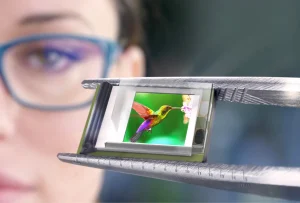
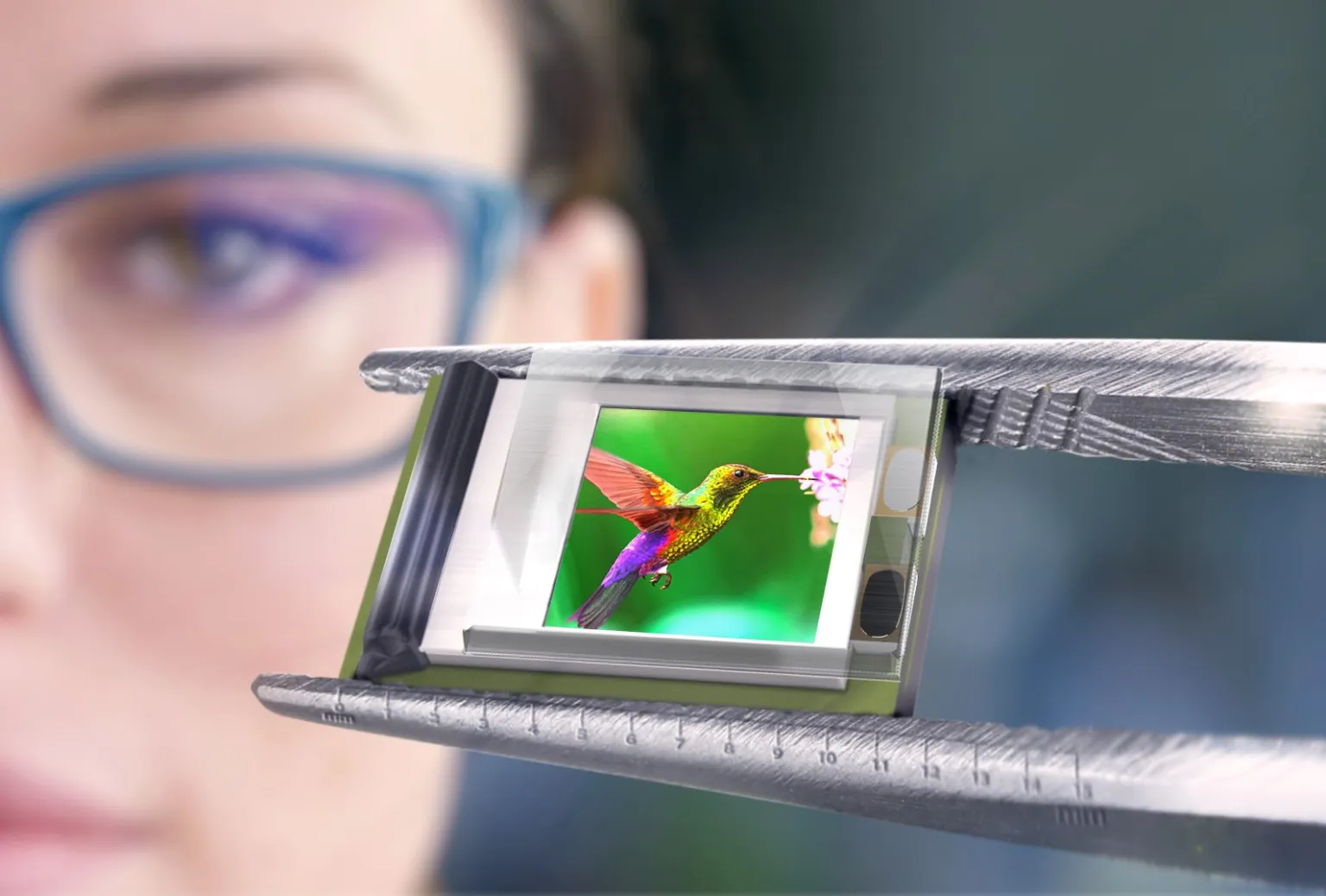
Wearables and AR devices may move in parallel, but not always under names shoppers recognize. Microdisplays can serve near-eye systems because they need high brightness in a tiny area. That makes sense for glasses, industrial headsets, and medical tools. Mass-market smart glasses, though, still need battery life, comfort, apps, and style. The screen is only one piece.
2029 to 2032 is the first serious mainstream window
The more realistic mainstream window starts near the end of this decade. By then, microLED mass production should have better transfer tools, better inspection, and faster repair. Prices may still sting, but they can begin to look like early OLED pricing rather than custom-installation pricing.
This is where consumer microLED products could become visible to normal buyers. Not cheap. Visible. Think premium TVs, high-end monitors, and maybe limited laptops aimed at creators or gamers. The tech will need a reason to beat OLED beyond “brighter.” OLED will not stand still, and Mini LED will keep improving on price.
Apple’s reported retreat from an in-house smartwatch display project is a warning sign. Reuters reported in March 2024 that Apple halted plans tied to its own smartwatch display work because of high cost and complexity. When a company with Apple’s resources slows down, the lesson is not that microLED is dead. It is that the finish line is farther away than the keynote crowd wants.
The Products Most Likely to Get It First
Once you stop asking “when will every device get it?” the timeline becomes clearer. Each product category has a different reason to adopt or avoid the tech. A screen for a stadium, a watch, and a phone do not fight the same battle.
TVs and video walls have the best early economics
Large screens give microLED its best early stage. A home theater buyer can accept a giant price if the screen delivers a rare experience. A hotel lobby, retail flagship store, or sports bar can treat the display as part of the venue. That is not how people buy a 55-inch TV for a bedroom.
The first wave of consumer microLED products will likely keep leaning into size. Large screens let brands sell the promise without racing straight into commodity pricing. This is also why you may see more “micro” branding in premium TV marketing than true direct-view microLED in affordable models.
There is a trap here. Some newer TV terms sound close but are not the same thing. Micro RGB and advanced Mini LED sets can improve color and brightness, yet they are not identical to a true self-emissive microLED screen. Buyers need to read the details before paying for a label.
For shoppers comparing living-room options, a guide like OLED vs Mini LED buying guide may help more than chasing one future format. A great OLED or Mini LED TV bought at the right size can beat waiting five years for a cheaper dream screen.
Watches, AR, and monitors face different friction
Watches sound like an ideal match because the screen is small. The catch is pixel density. A watch display sits close to your eye and must look clean in sunlight while saving battery. That is a brutal mix.
AR is even harder. A glasses display may need extreme brightness because optics waste light before it reaches your eye. It also has to stay cool on your face. Nobody wants a premium headset that feels like a tiny toaster.
Monitors sit somewhere in the middle. Gamers and creators care about response time, burn-in risk, brightness, and color. A professional monitor can carry a higher price than a family TV. Still, OLED monitors are improving fast, so microLED will need to win on more than lab specs.
The counterintuitive point is that phones may not lead. They are sold in huge volumes, need thin designs, tight battery behavior, tough supply chains, and low defect rates. A phone screen failure becomes a public relations headache overnight.
What Has to Improve Before Prices Feel Normal
The story now shifts from “can it work?” to “can it be made without waste?” That is the part most buyers never see. Display history is full of technologies that looked magical before factories humbled them. Plasma, OLED, Mini LED, and quantum dot all had long roads from demo to discount.
Yield repair may matter more than brightness
Brightness gets the headlines because it is easy to show. Defect handling matters more to the timeline. If a factory places millions of microscopic emitters and a tiny share misbehaves, someone must find and repair those faults at speed.
The U.S. Department of Energy has noted that micro-LED performance still needs improvement for lighting or display use, including the path toward greater energy savings. That may sound dry, but it points to the hidden work behind a screen: materials, device behavior, manufacturing control, and repeatable output.
A display brand can tolerate an expensive process for a six-figure wall. It cannot tolerate that process for a $999 holiday TV sale. Until inspection and repair become faster, cheaper, and steadier, the price curve will move slowly.
OLED will keep raising the bar
MicroLED is not racing against old OLED. It is racing against better OLED. Tandem OLED, brighter panels, improved burn-in controls, and larger production lines keep moving the target. Recent OLED factory expansion also points toward more affordable OLED laptops and monitors, which adds pressure on any premium display format.
That creates a strange outcome. MicroLED can be the better long-term display and still lose many short-term buying decisions. If a shopper can buy a beautiful OLED today for a fraction of the price, the future screen has to offer a clear reason to wait.
This matters for U.S. buyers building a home theater or upgrading a work setup. A practical smart TV upgrade checklist should start with room size, lighting, seating distance, gaming needs, and budget. The badge on the box comes later.
The non-obvious insight is that OLED success may slow microLED adoption in the mass market. A good enough product at a better price can hold the middle of the market for years.
Conclusion
The consumer rollout will not look like a sudden switch. It will look like a slow migration from luxury walls to specialty devices, then to premium TVs and monitors, then to broader categories after factories learn how to waste less. Micro LED Display Technology deserves the attention because it attacks real display limits, not fake ones. It can offer brightness, long life, fast response, and pixel-level control in one package. Still, the calendar belongs to manufacturing, not marketing. For most American buyers, the smart move is to watch the 2029 to 2032 window while buying the best screen that fits today’s room and budget. Early adopters can chase the first wave. Everyone else should demand proof in price, warranty, and product reviews before believing the label. The future screen will arrive when factories, not demos, say it is ready.
Frequently Asked Questions
How soon will microLED TVs become affordable for normal buyers?
Affordable models are unlikely before the late 2020s or early 2030s. Premium screens will arrive first because brands can charge enough to cover low yields and repair costs. Mainstream pricing needs better factory output, stronger supply chains, and real competition.
Is microLED better than OLED for home TVs?
It can be better in brightness, long-term durability, and burn-in resistance, but OLED is far cheaper and widely available. For most homes today, a strong OLED or Mini LED TV offers better value than waiting for a future format.
Why is microLED so expensive to manufacture?
The cost comes from placing, testing, and repairing millions of microscopic light emitters. A small defect rate can ruin an expensive panel. Factories need faster transfer methods and better inspection before prices can fall into normal consumer ranges.
Will smartphones get microLED screens soon?
Phones are unlikely to lead the rollout. They need dense pixels, thin designs, strong battery life, and huge production volume. A small manufacturing issue becomes costly fast. Premium TVs, AR optics, and specialty displays have a clearer early path.
Are Micro RGB TVs the same as true microLED TVs?
No. Micro RGB usually refers to advanced backlighting using red, green, and blue LED elements behind an LCD panel. True microLED is self-emissive, meaning the tiny LEDs form the image pixels themselves. The difference matters when comparing prices.
Why did Apple step back from microLED watch plans?
Reports pointed to cost and manufacturing complexity. That does not mean the tech has no future. It shows that even a wealthy company can pause when yield, supply, and pricing do not fit a mass consumer product.
What consumer products will use microLED first?
Large luxury TVs, video walls, AR display engines, and select wearable concepts are the most likely early categories. These products either support premium pricing or need high brightness in small optical systems. Regular laptops and phones may come later.
Should I wait for microLED before buying a new TV?
Waiting only makes sense if your current TV still works and you enjoy tracking display tech. Most buyers should choose a strong OLED or Mini LED set now. MicroLED needs more time before price, size, and availability make sense.